The food journal: noticing before changing.
A short written record can show patterns in appetite, energy, and routine that memory tends to smooth over.
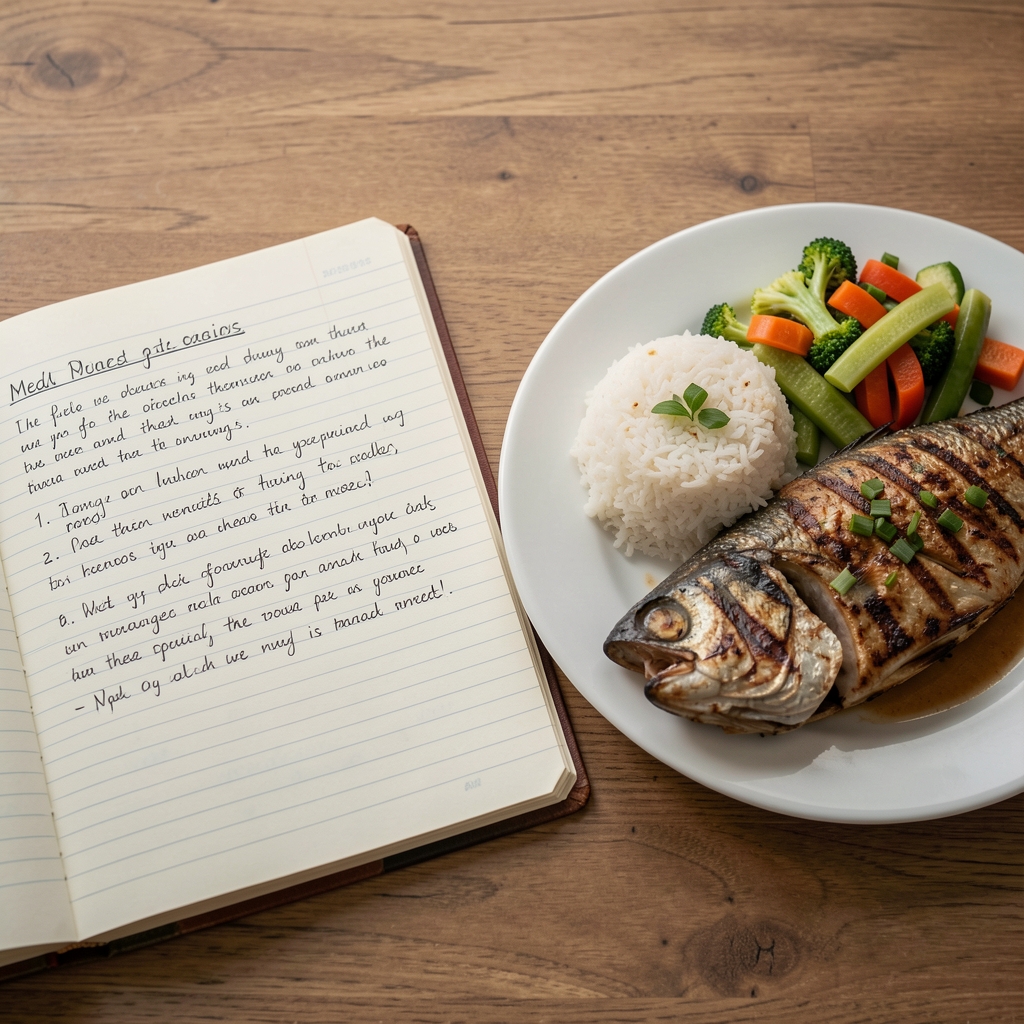
How to start in four steps
A journal works best when it is small enough to keep. Two weeks is a sensible first period.
Choose a format
Use a notebook, a notes app, or a photo folder. The format matters less than being able to open it quickly. Many readers prefer a pocket notebook because it does not invite scrolling.
Record simply
Write what you ate, roughly when, and how hungry you felt before and after. Add a line on mood, energy, and sleep from the night before. Avoid counting or judging; you are collecting information, not marks.
Look for patterns
After a week, read back. Do you skip breakfast and feel tired at 11 a.m.? Do late meals coincide with restless nights? Do you eat more vegetables on days you cook at home? Underline patterns rather than single events.
Pick one adjustment
Choose one small change, such as adding a portion of vegetables to lunch or moving dinner thirty minutes earlier. Test it for two weeks and note what happens.
What the journal can and cannot show
A food journal can reveal timing, variety, portion habits, and the circumstances that surround eating, such as eating at a desk or in front of a screen. It can also help you prepare for a conversation with a dietitian or doctor, who may ask what a typical week looks like.
It cannot diagnose a food intolerance, measure nutrients accurately, or determine what you should eat. If recording food becomes stressful, causes guilt, or leads you to restrict meals, it is a good moment to stop and talk with a professional. For some people, especially those with a history of disordered eating, a different approach may be more suitable.
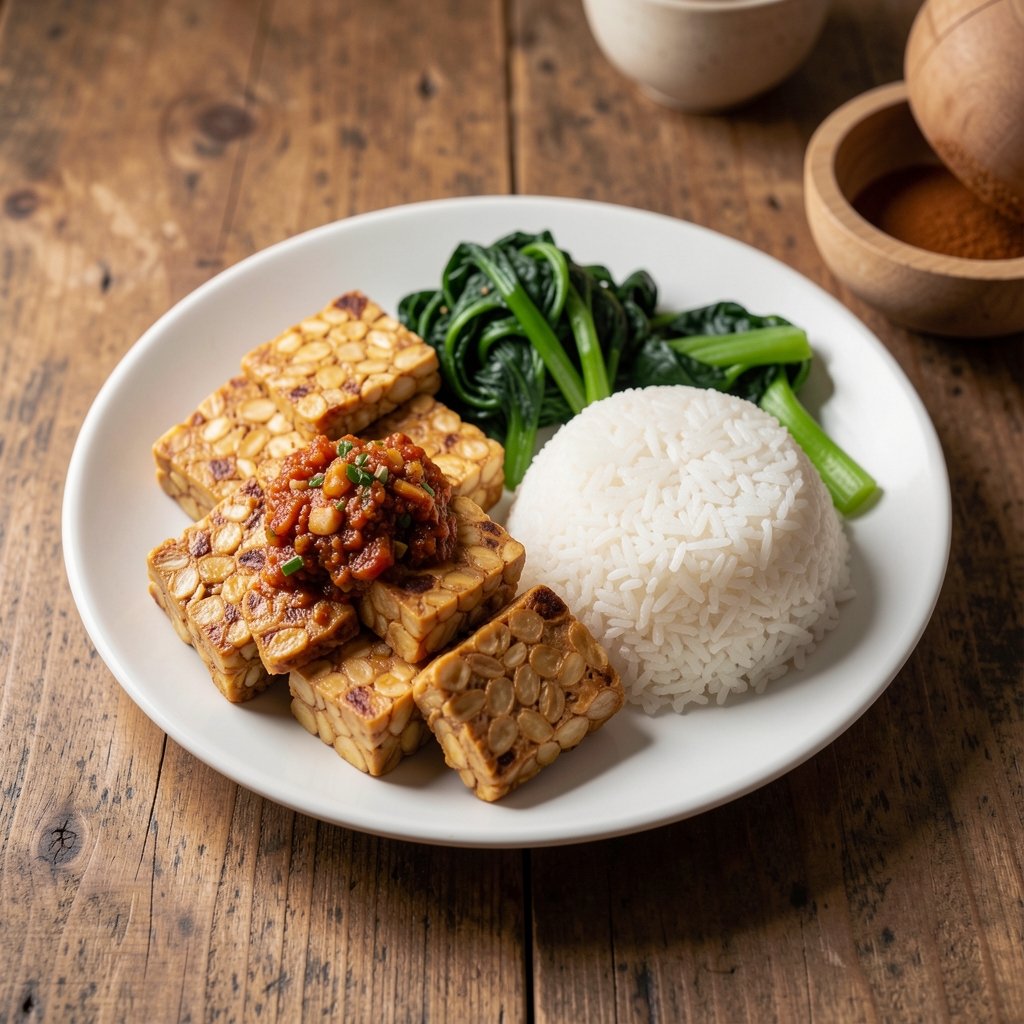
Local context counts too. Shared plates at family meals, fasting during Ramadan, and meals bought from warung make exact measurement impractical. Approximate notes such as “one plate rice, half plate vegetables, tempeh, a small piece of fish” are enough.
A sample page from a journal
An illustration of the level of detail that is usually sufficient. Entries are examples, not recommendations.
| Time | What I ate | Hunger before / after | Notes |
|---|---|---|---|
| 06:45 | Oatmeal with banana, tea without sugar | 3 / 6 | Rushed, ate standing |
| 12:30 | Rice, pecel vegetables, tempeh | 7 / 7 | Energy steady until 4 p.m. |
| 16:00 | Fried snack, sweet iced tea | 4 / 6 | Meeting ran late |
| 20:30 | Soup, rice, fish, fruit | 6 / 7 | Slept well |
Hunger is rated from 1 (very hungry) to 10 (uncomfortably full). Any scale you can remember works equally well.
Journal prompts to copy into your notebook
Morning prompt
How did I sleep? How hungry am I right now? What would a satisfying breakfast look like given my morning?
Midday prompt
Where am I eating, and with whom? Did I notice the first and last bites? Is there a vegetable or legume on the plate?
Evening prompt
What went well today? What would I repeat tomorrow? Is there a question I want to ask a dietitian or doctor?
Keep it kind
A journal is a tool for curiosity. If entries begin to feel like a test, shorten them, take a break, or switch to notes about energy and mood only. Placid does not provide personal nutrition plans; for individual guidance, a registered dietitian (ahli gizi) can help.
Ideas for reviewing your notes
- Count the days with at least one vegetable at two meals.
- Notice which meals are cooked at home and which are bought, without attaching a value to either.
- Look at what you drank with meals and in between.
- Mark the days when you felt best, and look for anything they share, such as sleep, walking, or a relaxed lunch.
- Circle foods you enjoyed and want more of; enjoyment is part of sustainable eating.
Continue with nutrition basics, digestion, or the contact page if you have questions. Placid, Jl. Cendrawasih No. 88, Kebayoran Baru, South Jakarta 12120, +62 813 7755 3399.