Hydration: drinking with attention, not anxiety.
Fluid needs shift with climate, work, and food. A calm routine is usually more useful than a fixed number.
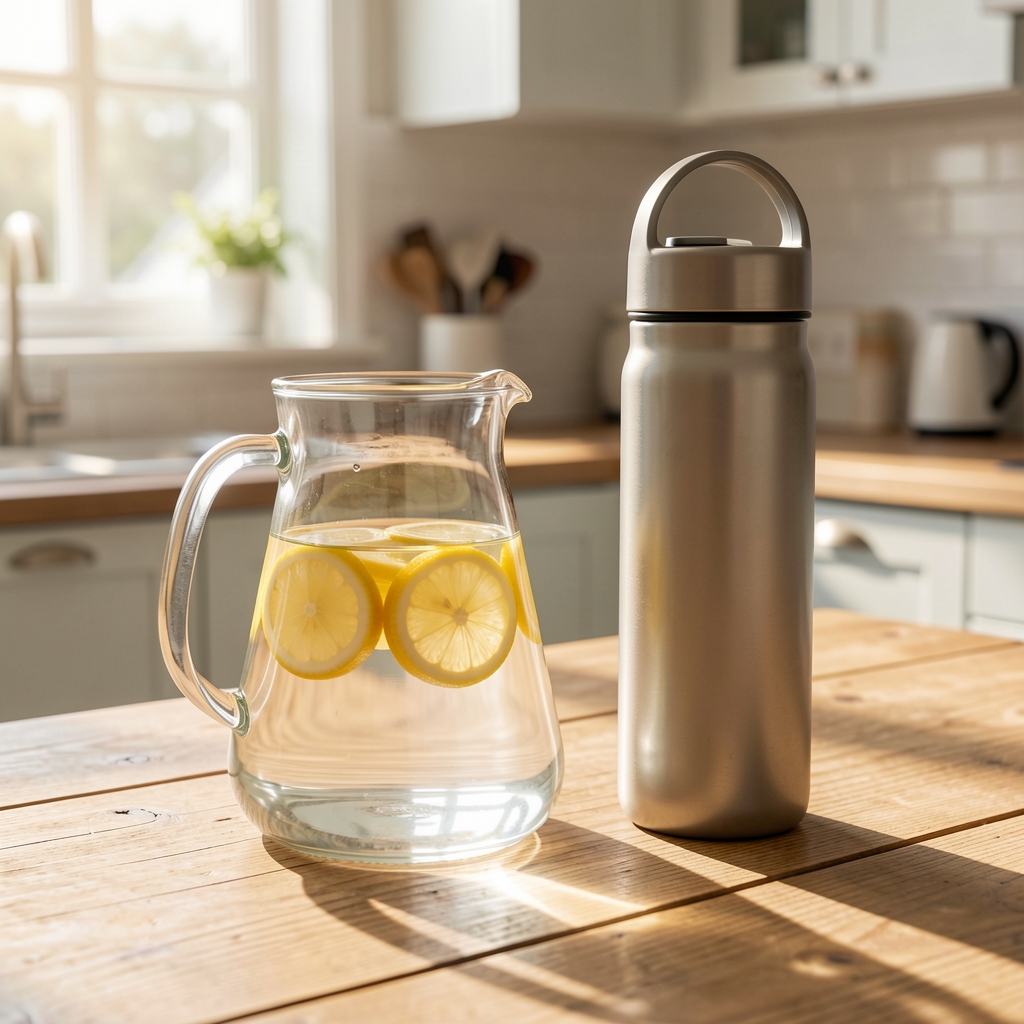
Hydration in numbers
Why water matters, and why there is no single number
Water carries nutrients, supports digestion, helps regulate temperature, and cushions joints. Because bodies lose water through breath, sweat, and urine, regular replacement is part of normal life. The familiar advice of eight glasses a day is a rule of thumb rather than a scientific requirement, and the real amount depends on body size, activity, climate, and diet.
Jakarta's heat and humidity make sweat loss more noticeable during commuting, outdoor work, or sports. Meals also contribute: soups, fruit, rice, and vegetables carry a good deal of water, and a bowl of soto or sayur asem counts toward the day's intake. Tea and coffee contribute as well, although very large quantities of caffeine can disturb sleep.
Most healthy adults can rely on thirst as a guide. Older adults sometimes notice thirst less, so a routine, such as a glass with each meal and one mid-morning and mid-afternoon, can be helpful.
A practical daily checklist
Tick these mentally; the aim is awareness, not perfection.
- A glass of water soon after waking, since most people have gone several hours without a drink.
- A bottle within sight at your desk or in your bag during commuting.
- A drink with each meal, with extra when food is salty or spicy.
- Additional fluid before and after exercise, particularly outdoors at midday.
- A glance at urine colour: pale straw usually suggests adequate intake, while consistently dark colour suggests drinking more.
- Lighter drinking in the two hours before bed if night-time waking is a problem.
Three situations, three approaches
At the desk
Air-conditioned offices can hide thirst. Setting a reminder every ninety minutes, or pairing a drink with meeting breaks, builds a habit without extra effort. A refillable bottle of around 600 millilitres makes the quantity easy to track.
On the move
Motorbike commuters, delivery workers, and field staff lose more through sweat. Carrying water, taking shade breaks, and drinking small amounts often are more comfortable than large amounts at once.
During exercise
For sessions under an hour, water is usually enough. For long, intense sessions in heat, some people add a little salt through food or an oral rehydration solution, discussed with a professional if they have blood pressure concerns.
Drinks compared
A descriptive overview of common Indonesian drinks. It is not a ranking.
| Drink | Typical features | Consideration |
|---|---|---|
| Plain water | No energy, widely available | Use safely boiled or reliably filtered water |
| Unsweetened tea | Contains some caffeine | Notice its effect on afternoon and evening sleep |
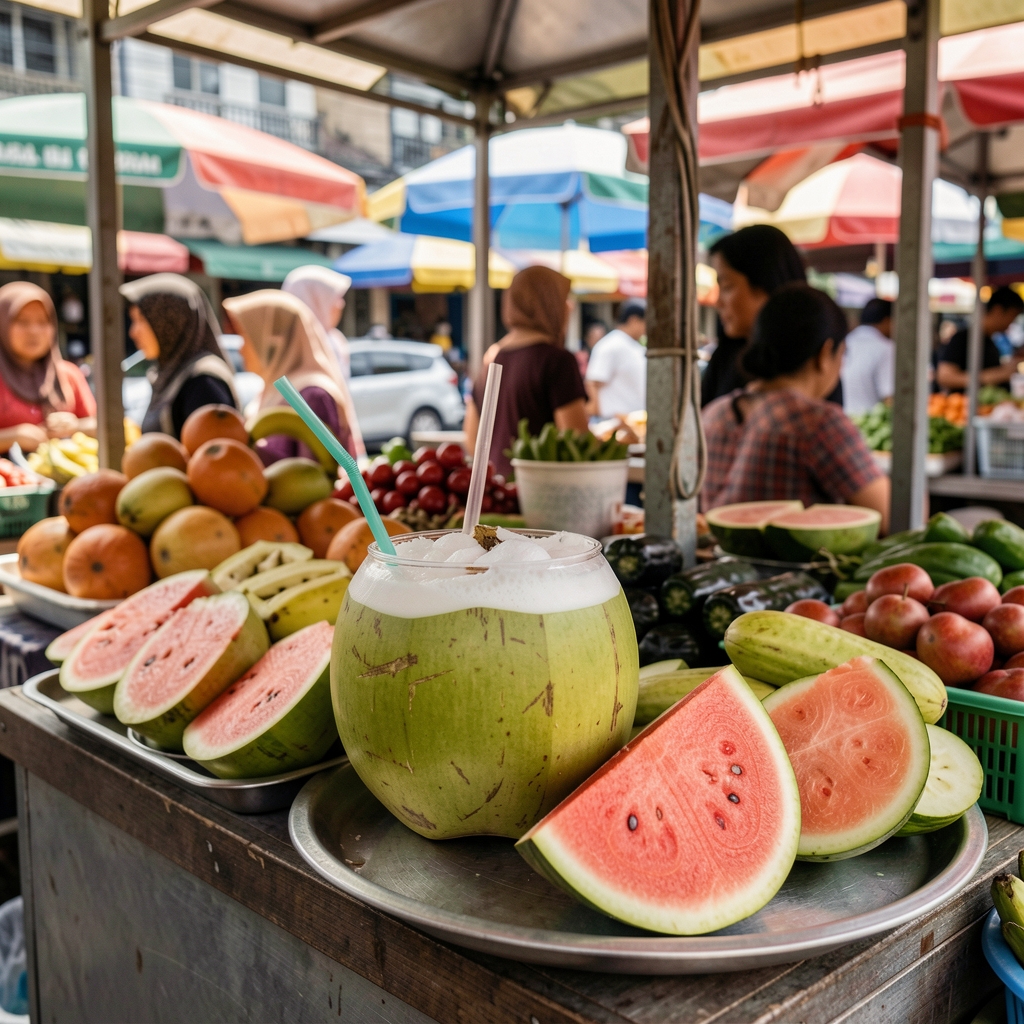
| Coconut water | Natural potassium, some sugar | Pleasant after activity; consider portion size |
| Sweet iced tea or soft drinks | High added sugar | Public health bodies suggest limiting added sugar |
| Fruit-infused water | Flavour without added sugar | A simple way to make plain water more appealing |
When to seek advice
Persistent excessive thirst, very frequent urination, dizziness on standing, confusion, or markedly dark urine despite drinking can have many causes and deserve professional attention. People with kidney, heart, or liver conditions are often given individual fluid guidance, which should replace any general advice on this page.
Hydration questions
Can I drink too much water?
Yes, although it is uncommon in everyday life. Drinking very large volumes in a short period can dilute blood sodium. Spreading fluids through the day avoids this.
Does coffee dehydrate?
Moderate coffee intake contributes to daily fluid. Large amounts may disturb sleep or cause jitteriness, which is a separate matter.
Is tap water safe to drink in Jakarta?
Most households boil water or use refillable gallon dispensers. Follow local guidance and keep storage containers clean.
Read more about nutrition and movement, or write to us at Jl. Cendrawasih No. 88, Kebayoran Baru, South Jakarta 12120, +62 813 7755 3399.