Plants
Vegetables, fruit, beans, and whole grains bring fibre, colour, texture, and micronutrients across the week.
A flexible plate can hold local ingredients, familiar flavours, and room for real life.
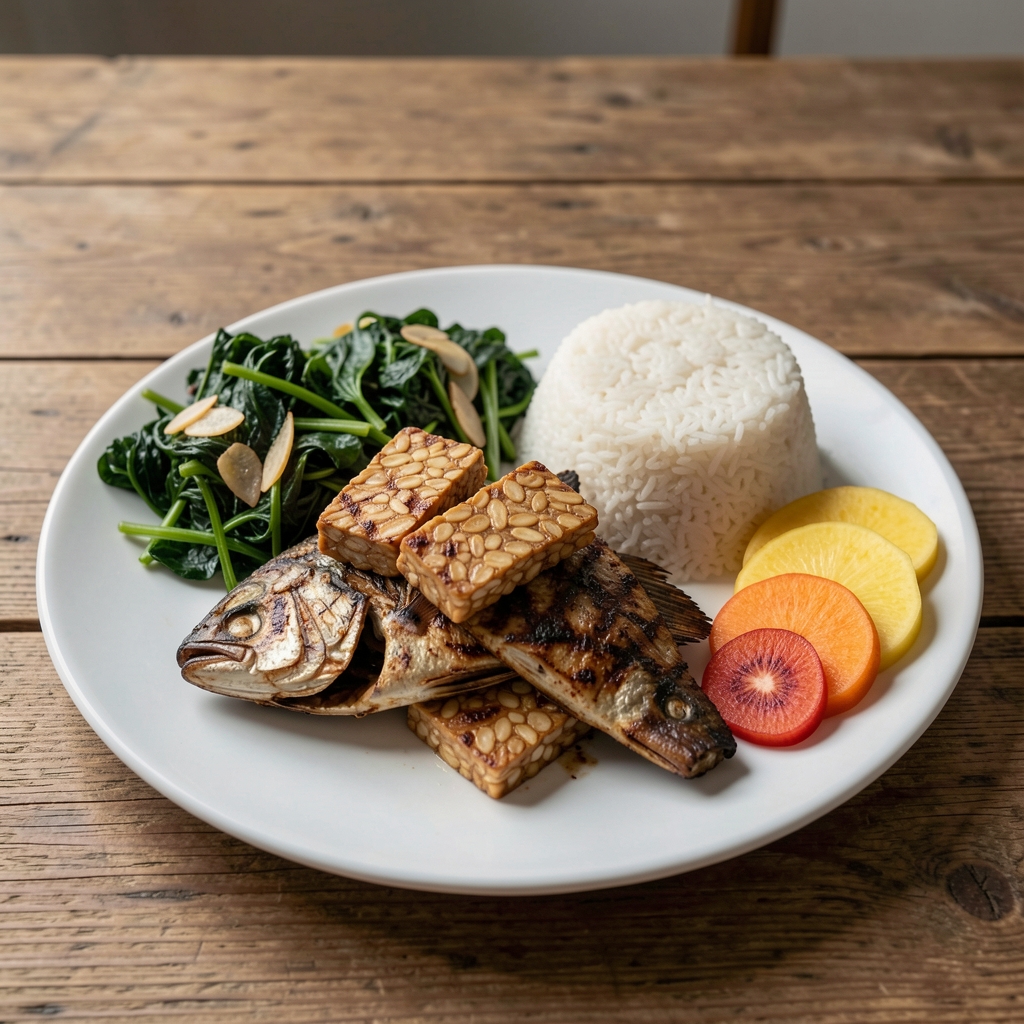
Vegetables, fruit, beans, and whole grains bring fibre, colour, texture, and micronutrients across the week.
Fish, eggs, tofu, tempeh, poultry, and legumes can contribute to satisfying meals in different portions.
Water is a dependable default, while thirst, heat, activity, and clinical conditions affect individual needs.
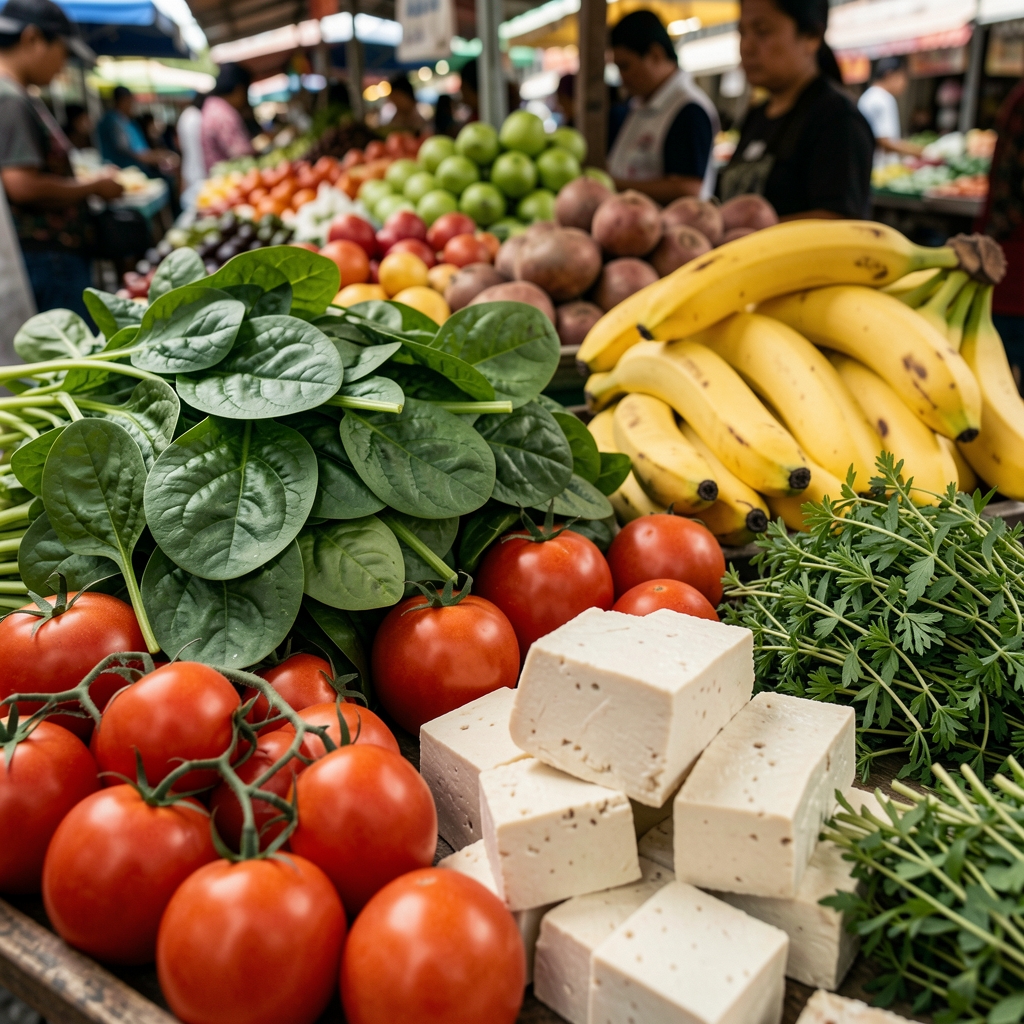
Nutrition advice becomes less useful when it ignores price, cooking equipment, family meals, religion, allergies, shift work, or the pleasure of eating. A sustainable pattern might include rice, vegetables, tempeh, fruit, and a favourite meal, rather than a narrow list of approved foods.
If you manage diabetes, kidney disease, digestive illness, or another condition, use general information as a prompt for personalised guidance.