Workouts: modest sessions that survive a busy week.
Consistency, gradual progression, and enjoyment matter more than intensity for most adults.
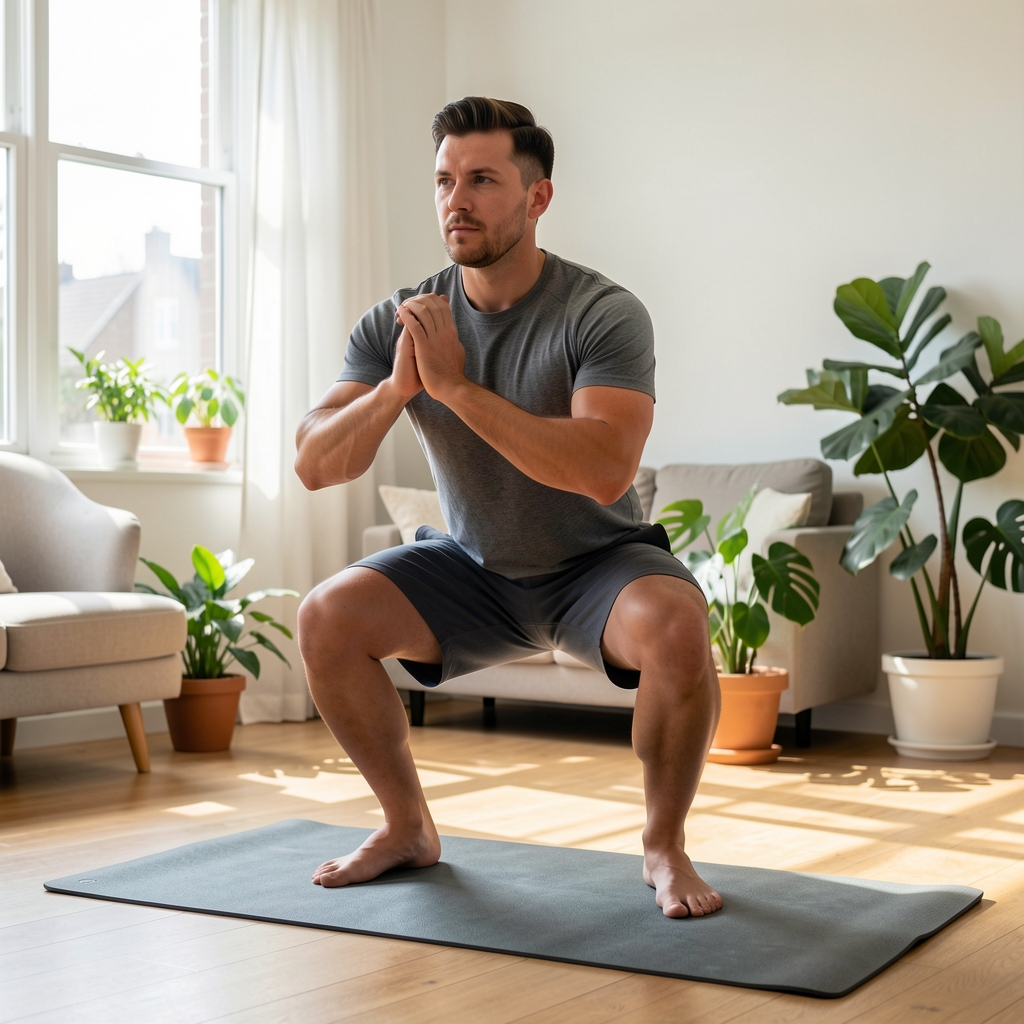
A simple weekly frame
Principles before programmes
Most training plans work if they are followed, and most fail because they are too demanding for real life. Start with a volume you could repeat even in a tiring week, and increase it slowly. A common approach is to add a small amount of load, repetitions, or time every one or two weeks, while keeping at least one or two repetitions in reserve so that technique remains steady.
Men over thirty often return to exercise after a break, and the temptation is to resume where they stopped years ago. Tendons and joints adapt more slowly than muscles, so a gentle first month reduces the chance of setbacks. Warm up with easy movement, choose a range of motion you control, and stop if you feel sharp pain.
Variety supports both enjoyment and balanced fitness: walking or cycling for the heart, resistance work for muscle and bone, and mobility or stretching for comfort.
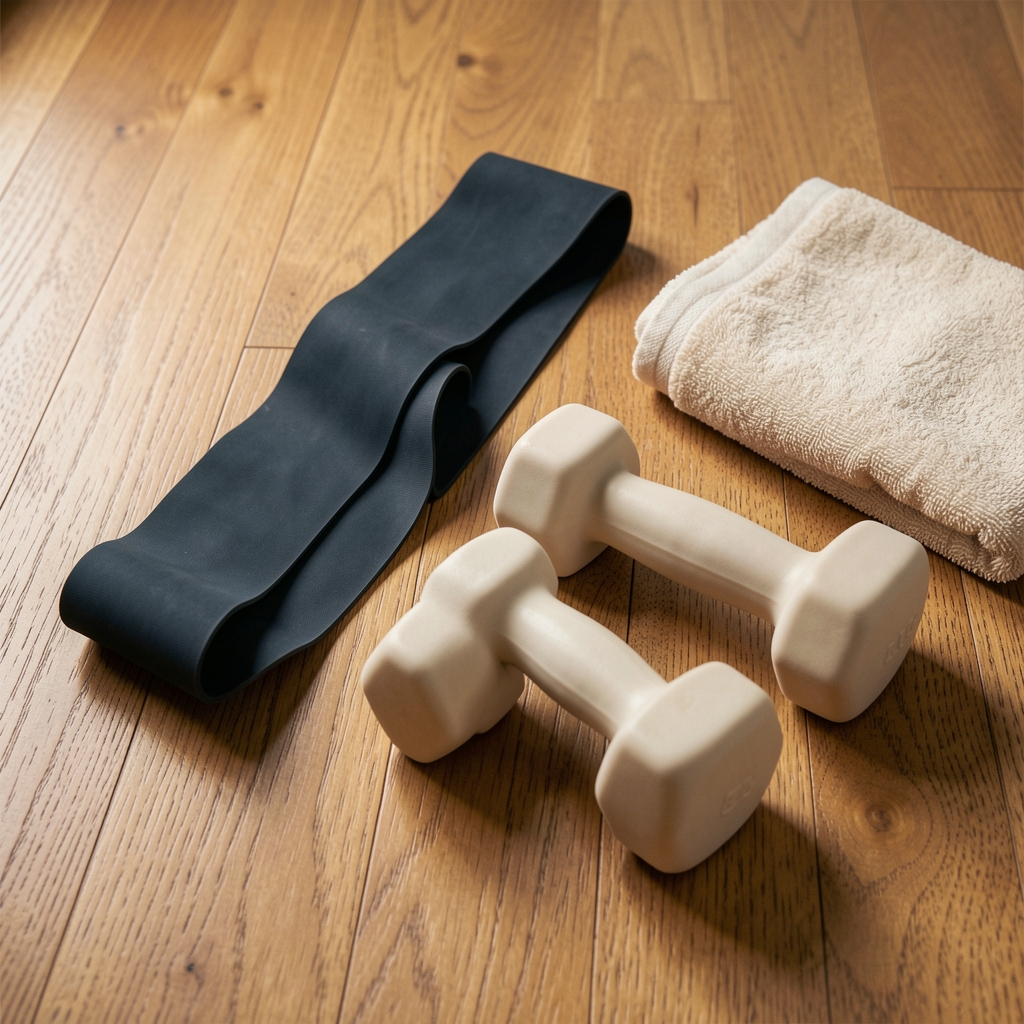
A sample week
An example only. Adjust to your schedule, ability, and any advice from a clinician or qualified trainer.
Monday: strength A
Squats to a chair, push-ups on a wall or bench, band rows, and a plank hold. Two to three rounds of eight to twelve repetitions, resting a minute between exercises.
Tuesday: easy walk
Thirty minutes at a pace that allows conversation. Choose a shaded route or go early or late to avoid midday heat.
Wednesday: mobility
Fifteen minutes of gentle hip, shoulder, and spine movements, finishing with slow breathing.
Thursday: strength B
Step-ups, hip hinges with a light weight, overhead press with bottles or dumbbells, and side planks.
Saturday: longer activity
Cycling, swimming, or a longer walk with family or friends, which adds a social element.
Choosing an activity
| Activity | Main features | Considerations |
|---|---|---|
| Brisk walking | Low cost, easy to scale | Heat and air quality; choose times with cooler air |
| Body-weight strength | No equipment, home-friendly | Technique matters; progress by adding repetitions |
| Swimming | Gentle on joints | Access to a pool; safe supervision |
| Cycling | Good for commuting and leisure | Traffic safety; use a helmet |
| Pencak silat or sports clubs | Skill, social contact, culture | Choose a reputable instructor and build up gradually |
Safety first
Check with a clinician before starting vigorous exercise if you have heart or blood pressure concerns, joint problems, chest discomfort with effort, dizziness, or have been inactive for a long time. Stop and seek help for chest pain, severe breathlessness, fainting, or sudden sharp pain. Drink water, wear suitable shoes, and avoid training in the hottest hours.
Habits that keep training going
- Schedule sessions like meetings, with a fixed time and place.
- Prepare clothes and shoes the night before.
- Keep a short training log with exercises, repetitions, and how it felt.
- Train with a friend or join a group walk to stay motivated.
- Treat missed sessions as information, not failure, and resume the next day.
Read more about movement, sleep for recovery, and the food journal. For questions, contact Placid at Jl. Cendrawasih No. 88, Kebayoran Baru, South Jakarta 12120, +62 813 7755 3399, or through the contact page.